Photon Number Resolution: Background and State-of-the-Art
What is Photon Number Resolution (PNR)?
Photon Number Resolution (PNR) refers to the ability to distinguish how many photons are impinging on a single photon detector within a defined time window. It is typically relevant at low-light levels, where photon number statistics are important.
PNR is gaining strong interest in various applications, including quantum information processing, super-resolution imaging and microscopy, and quantum communication.
What is the State-of-the-Art for PNR? Pseudo-PNR vs intrinsic PNR detection schemes.
Photon Number Resolution can be achieved through various strategies, depending on whether photon numbers are inferred statistically, known as pseudo-PNR, or measured directly from the detector signal, referred to as intrinsic PNR. The detectors typically used in PNR architecture depend on these approaches:
Pseudo-PNR detectors: In conventional pseudo-PNR approaches, photon number discrimination is achieved by splitting photons across multiple detectors or time bins, relying on spatial or temporal information to probabilistically infer the photon number:
Silicon PhotoMultiplier (SiPMs) arrays or multipixel Avalanche Photodiodes (APDs): Arrays of detectors used in Geiger mode can register multiple simultaneous avalanches. Each triggered microcell contributes to the overall output, allowing approximate but direct discrimination of photon number at room temperature.
Arrays of Superconducting Nanowire Single-Photon Detectors (SNSPDs): Similarly to the room-temperature detector case, multiple SNSPDs can be used to measure and discriminate between photon numbers. Multiple SNSPD elements are combined in an array to count coincident detection events, providing high-resolution multi-photon signals with excellent timing precision.
Intrinsic PNR detectors: Certain photon detectors inherently produce signals from which the photon number can be retrieved directly:
Transition-Edge Sensors (TESs): TESs offer energy resolution with near-unity quantum efficiency, typically spanning the visible to near-infrared range, making them the gold standard for intrinsic PNR. They operate at cryogenic temperatures (down to a few mK) with rise times in the microsecond range.
Single and parallel SNSPDs: These detectors are generally optimized for binary “click” detection, but careful pulse shape analysis provides PNR information. They operate at cryogenic temperatures (<4 K) with rise times in the tens of picoseconds range. Many studies have focused on the behavior of the SNSPD signal as a function of photon number 1 2 3.
Room-temperature detectors: Devices such as silicon photomultipliers (SiPMs) and hybrid photodetectors (HPDs), which combine an amplification stage, as in a photomultiplier, with a semiconductor sensor, have demonstrated intrinsic PNR capabilities through pulse amplitude or shape analysis. They operate at room temperature with rise times in the nanosecond range. For practical examples, see the Swabian Instruments application note on “Photon‐number resolution with room‐temperature detectors.”
Depending on the architecture, PNR can be achieved using the following strategies:
Approaches for evaluating pseudo-PNR data:
Spatial multiplexing: The incoming signal is split into multiple channels, each monitored by a binary detector. The analysis reconstructs the probability distribution of photon numbers, evaluating the photon arrival on different detectors in the same time window 4.
Temporal multiplexing: Delay lines spread photons across multiple time bins. The photon arrival on the detector is then time-tagged, and the photon number is reconstructed from the temporal detection pattern 4.
Approaches for intrinsic PNR detection via pulse-shape analysis:
Amplitude resolution: The pulse height or pulse shape from the detector is fitted to the calibrated response. Therefore, there is a direct relation between the height of the pulse amplitude and the number of photons impinging on the detector.
Laser-front edge timing: This method considers the time difference between the arrival time of the detector pulse’s leading edge relative to the synchronization signal from the laser.
The Role of Readout Electronics (Time Taggers) for Photon Number Resolution
While detector physics defines the fundamental PNR limit, readout performance strongly impacts achievable resolution and fidelity. Acquisition methods benefit from fast, low-noise, multi-channel acquisition.
Swabian Instruments’ Time Taggers offer signal edge detection with picosecond resolution, high data throughput and multi-channel configuration. By defining voltage trigger levels at different pulse amplitudes and tagging both the rising and falling edges of the signal at the same time, one can evaluate the intrinsic shape of the detector pulse for PNR characterization.
These capabilities enable both intrinsic and pseudo-PNR experiments with improved fidelity, parallel acquisition, and streamlined detector integration. Moreover, they can unlock the possibility of applying dedicated methods even to single detectors for resolving the number of photons.
Pseudo-PNR method with Swabian Instruments: Based on the setup architecture described above, Swabian Instruments improves the system by simplifying analysis for the user.
- The Combinations Virtual channel evaluates coincidence events across multiple detector channels. Determining how many detectors register a click within the same time window provides direct insight into the photon number of each light pulse.
Intrinsic PNR methods with Swabian Instruments: Using the detectors mentioned above, additional methods can be implemented to achieve intrinsic PNR:
The laser-edge time differences approach evaluates the time difference between the synchronization signal of the laser and the time when the front and rear edges of the detector pulses are detected. Considering both edges of the detector pulse improves PNR results 5. More details can be found in the Swabian Instruments application note on “Time‐correlated single‐photon counting”.
The Slope Method technique involves analyzing the rising edge of the detector pulse using predefined thresholds at different voltage levels, such as 20% and 80% of the maximum voltage. The slope between these thresholds can then be correlated to the number of photons absorbed by the detector, and the slope of the signal distinguishes between single-photon and multi-photon events 6.
In the Pulse-Width Method, the temporal duration of the electrical pulse is measured and used to discriminate photon numbers. Multi-photon events typically produce broader pulses than single-photon events, and statistical analysis of pulse-width variations enables direct photon-number classification from the detector output. Additional experimental details are provided in the Swabian Instruments application note on “High-Fidelity PNR with Parallel SNSPDs”.
The future of Photon Number Resolution and the role of Swabian Instruments
Pseudo-PNR provides probabilistic inference, typically requiring multiplexing architectures or statistical post-processing, rather than a detector-level response. In contrast, intrinsic PNR provides a direct measurement of photon number from a single detector. Although detector physics defines the core limits of PNR, implementation and performance rely on the readout capability. Methods such as pulse-width and slope analysis have demonstrated reliable discrimination between one- and few-photon events, expanding the potential of PNR with simplified and less costly setups.
Swabian Instruments’ Time Taggers, with picosecond-scale signal edge detection and flexible signal analysis, can well support both intrinsic and pseudo-PNR approaches by improving the fidelity of the measurement, enabling parallel acquisition, and making Photon Number Resolution experiments practical.
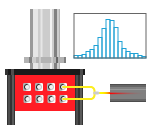
Time-Correlated Single-Photon Counting (TCSPC) with Single Quantum EOS SNSPD System
TCSPC_Swabian_Instruments.pdf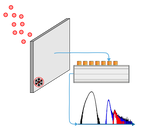
Photon Number Resolution (PNR) with Room Temperature Detector
Photon_number_resolution_with_room_temperature_detector.pdf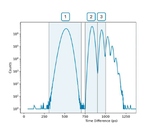
High-fidelity PNR with IDQ Parallel SNSPDs
high-fidelity-pnr-with-parallel-snspds-pnr-linq.pdfK. Nicolich, et al., “Universal Model for the Turn-on Dynamics of Superconducting Nanowire Single-Photon Detectors.”, Phys. Rev. Applied, 12, 034020 (2019). ↩︎
M. Endo, et al., “Quantum detector tomography of a superconducting nanostrip photon-number-resolving detector.”, Opt. Express 29, 11728-11738 (2021). ↩︎
T. Schapeler, et al., “How well can superconducting nanowire single-photon detectors resolve photon number?”, arXiv:2310.12471 [quant-ph] (2023). ↩︎
X. Chen, et al. “Temporal and spatial multiplexed infrared single-photon counter based on high-speed avalanche photodiode.”, Sci Rep 7, 44600 (2017). ↩︎ ↩︎
G. Sauer, et al., “Resolving Photon Numbers Using Ultra-High-Resolution Timing of a Single Low-Jitter Superconducting Nanowire Detector.”, arXiv:2310.12472 [quant-ph] (2023). ↩︎
M. Perera-Gonzalez, et al., “Enhanced Photon Number Resolution (PNR): optimizing signal chain and software capabilities." Proc. SPIE PC13376, Quantum Sensing and Nano Electronics and Photonics XXI, PC1337616 (2025). ↩︎