
Knowledge
Knowledge Base
Getting Started 6
- Optimal PC Requirements for Time Tagger
Learn how to choose a PC with sufficient CPU performance for optimal data streaming and analysis with Time Tagger.
- Connecting Time Tagger via USB Port
Learn how to troubleshoot and verify the USB connection between your Time Tagger and PC.
- Resolving License Acquisition Errors
Learn how to resolve common issues with automatic license acquisition for Time Tagger software.
- Fixing Python Import Errors for Time Tagger
Learn how to fix the two most common Python import errors when using Time Tagger, caused by a missing PYTHONPATH entry or an incompatible NumPy version.
- Getting Started with Time Tagger in NI LabVIEW
Learn how to program Time Tagger from NI LabVIEW using .NET nodes, including where to find examples and a walkthrough screencast.
- Using Time Tagger on macOS
Learn how to use Time Tagger on macOS via a Windows virtual machine or remote control with TimeTaggerRPC.
- Optimal PC Requirements for Time Tagger
Hardware & Experimental Setup 5
- Recommended Accessories: Cables, Splitters, Attenuators, and Inverters
Learn how to integrate accessories like cables, splitters, attenuators, and inverters to send and shape signals in your experiment.
- Signal Requirements for Time Tagger Inputs
Learn what signal types, voltage ranges, and pulse shapes your Time Tagger can detect, including trigger levels and minimum amplitude requirements.
- Compensating for Channel Delays
Learn how to compensate for delays between channels depending on the signal type.
- Connecting Time Tagger to an External FPGA
Learn how to connect the Time Tagger X to an external FPGA using its QSFP+ interface for high-speed signal output.
- Detecting Falling Edges of Pulses
Learn how the Time Tagger distinguishes rising and falling edges of a pulse and how each is represented in your data.
- Recommended Accessories: Cables, Splitters, Attenuators, and Inverters
API 7
- Assigning Absolute (UTC) Timestamps to Time Tags
Learn why Time Tagger timestamps are relative rather than absolute, and how to align them to UTC using the ReferenceClock and a 1PPS signal.
- Measuring the Average Count Rate
Learn how to measure the average count rate over an infinite or a precisely defined duration using a Time Tagger.
- Designing Time Histograms
Learn how to choose the right time-histogram measurement type, bin width and number of bins for your experiment.
- Exporting Data and Saving Plots
Learn how to export raw data and analysis results, and how to save plots, using the Time Tagger API and Time Tagger Lab.
- Using the Same Channel in Multiple Measurements
Learn how our API lets multiple measurements share the same channel simultaneously, and how to use SynchronizedMeasurements to compare them on identical data.
- Maximum Time Span Window for Measurements
Learn how long a Time Tagger measurement can run before its timestamps roll over, and what happens when they do.
- Analyzing Timestamps from Other Time Tagger Devices
Learn why Time Tagger software only works with Swabian Instruments hardware and not third-party time-tagging devices.
- Assigning Absolute (UTC) Timestamps to Time Tags
Performance 4
- Transfer Rate Limits for Each Time Tagger Model
Learn the maximum data transfer rates of each Time Tagger model over USB, the 10 GbE link, an external FPGA link, and TimeTaggerNetwork.
- CPU Performance Impact on Transfer Rate
Learn how different CPUs impact the maximum USB transfer rate achievable with a Time Tagger Ultra or Time Tagger X.
- Overflow Caused by Slow Data Processing
Learn how slow data processing, not just a high incoming tag rate, can cause overflow and a low measured count rate.
- Recommended USB Accessories
Learn how to use USB extenders, hubs, and docking stations with Time Taggers without degrading the transfer performance
- Transfer Rate Limits for Each Time Tagger Model
Application Notes
 Application Note
LNP Self-Assembly Kinetics with Simultaneous Multi-Angle DLS
Related Products: DLScatXNA Pharma Swabian Instruments Application Note
Particle Size Validation with Multi-Angle DLScat Instrument
Related Products: DLScatSwabian Instruments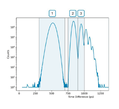 Application Note
High-fidelity PNR with IDQ Parallel SNSPDs
Related Products: Time Tagger XSwabian Instruments Application Note
Time of Flight Light Detection and Ranging (ToF LiDAR)
Related Products: Time Tagger UltraSwabian Instruments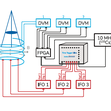 Application Note
Trigger‐Synchronous Frequency Counting with Time Tagger
Related Products: Time Tagger UltraSwabian Instruments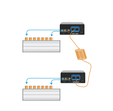 Application Note
Remote Synchronization of Time Taggers with SubNanosecond Precision via White Rabbit
Related Products: Time Tagger XSwabian Instruments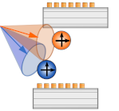 Application Note
Picosecond‐Accurate Stable Measurement of Correlated Signals with Two Time Taggers Over a Distance of 13 Kilometers
Related Products: Time Tagger UltraKTH Royal Institute of Technology Swabian Instruments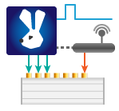 Application Note
Measuring the Timing Accuracy and Jitter of 1PPS Signals in White Rabbit Applications
Related Products: Time Tagger UltraSeven Solutions Swabian Instruments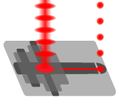 Application Note
Integration of the Sparrow Quantum Single-Photon Chip with the Montana Instruments Cryo-Optic X-Plane System
Related Products: Time Tagger 20Sparrow Quantum Montana Instruments Swabian Instruments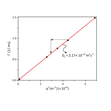 Application Note
Multi-angle Simultaneous Dynamic Light Scattering (MASDLS)
Related Products: DLScatSwabian Instruments Application Note
Multi-modal Particle Size Distributions with DLScat
Related Products: DLScatSwabian Instruments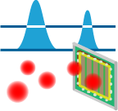 Application Note
Characterization of Silicon Photomultipliers Single Photon Detectors
Related Products: Time Tagger UltraKETEK Swabian Instruments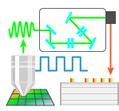 Application Note
Time-Resolved Brillouin Light Scattering (BLS)
Related Products: Time Tagger 20 , Pulse Streamer 8/2THATec Innovation Swabian Instruments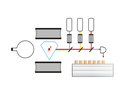 Application Note
Control and Readout of Pulsed NV Color Center Experiments with Precise Timing
Related Products: Time Tagger UltraZurich Instruments Swabian Instruments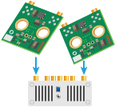 Application Note
Two-Photon Timing Resolution of Record‐Breaking Low-Jitter SPADs Measured by Time Tagger Ultra High-Res
Related Products: Time Tagger UltraUniversité de Sherbrooke Swabian Instruments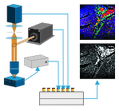 Application Note
Time‐Resolved Fluorescence Microscopy and Spectroscopy with ISS Microscopy
Related Products: Time Tagger XISS Inc. Swabian Instruments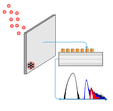 Application Note
Photon Number Resolution (PNR) with Room Temperature Detector
Related Products: Time Tagger XColorado School of Mines Swabian Instruments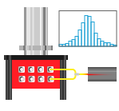 Application Note
Time-Correlated Single-Photon Counting (TCSPC) with Single Quantum EOS SNSPD System
Related Products: Time Tagger UltraSingle Quantum Swabian Instruments Application Note
Single‐Photon Random Sampling of Optical Signals
Related Products: Time Tagger Ultra , Pulse Streamer 8/2SCONTEL Swabian Instruments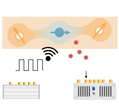 Application Note
Optically Detected Magnetic Resonance (ODMR)
Related Products: Time Tagger 20 , Pulse Streamer 8/2The University of Chicago Swabian Instruments
Scientific Concepts
- Scientific ConceptRead more
Introduction to Particle Sizing with Dynamic Light Scattering System
Dynamic Light Scattering (DLS) characterizes particles from nanometers to micrometers by analyzing intensity fluctuations in scattered light caused by Brownian motion. Correlation timing electronics convert intensity data into correlation functions and diffusion coefficients, which yield hydrodynamic radius via the Stokes-Einstein equation. Multiangle DLS measurements provide robust size distributions for polydisperse samples using Cumulant or CONTIN analysis methods.
- Scientific ConceptRead more
Photon Number Resolution: Background and State-of-the-Art
Photon Number Resolution (PNR), the ability to distinguish how many photons are impinging on a single photon detector within a defined time window, can be achieved through pseudo-PNR, where photon numbers are statistically inferred, or intrinsic PNR, where photon numbers are measured directly from the detector signal.
- Scientific ConceptRead more
Time-Correlated Single Photon Counting (TCSPC)
Time-Correlated Single Photon Counting (TCSPC) is a technique that measures the precise arrival times of individual photons emitted by a sample following an excitation with a pulsed light source.